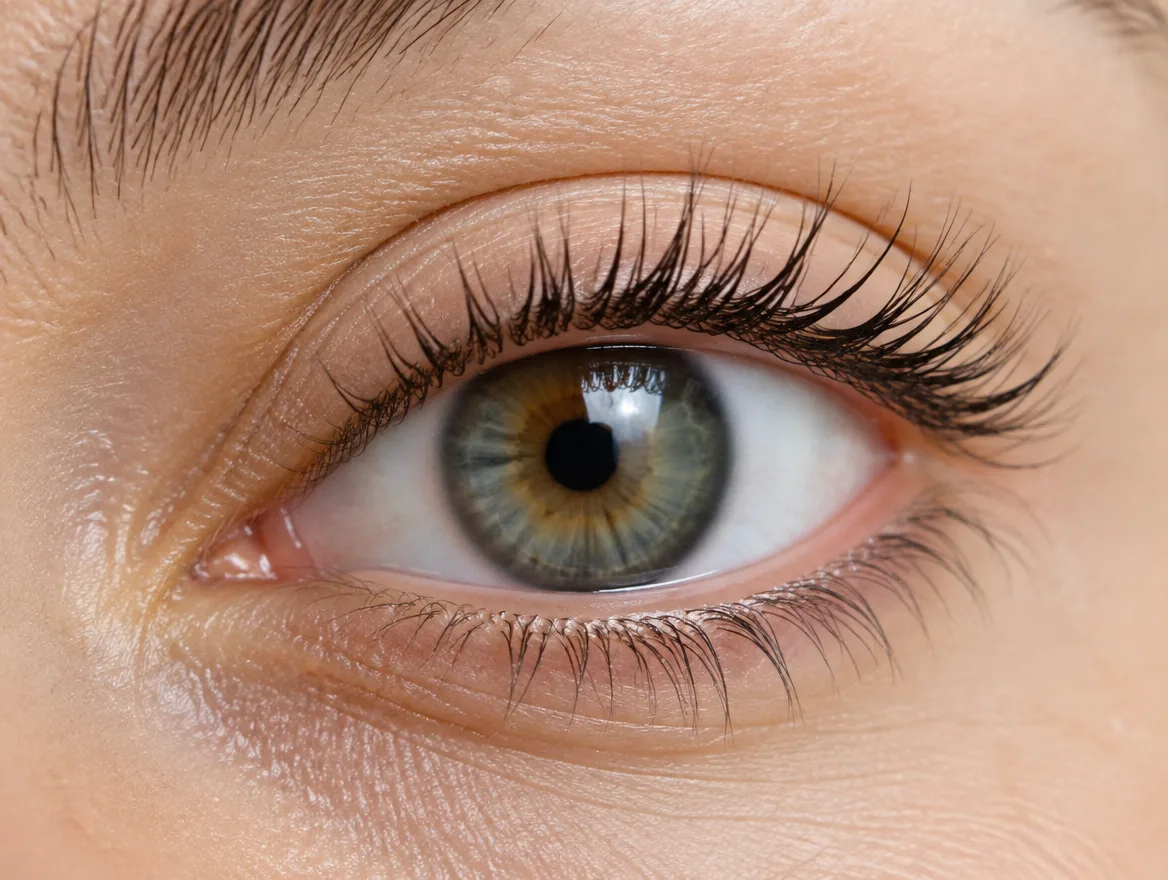
Family 01
Peptides
Short amino acid chains that signal the follicle to hold the growth phase longer. Slower than prostaglandins, far better tolerated, and the basis of QUALASH, UKLASH, Sweed and The Ordinary.
Guide · Ingredients and the growth cycle
A lash serum cannot create new follicles. It changes how long each lash stays in its growth phase, how thick the shaft becomes, and how easily it snaps. Which of those three it does depends entirely on the active family on the label.
Family 01
Short amino acid chains that signal the follicle to hold the growth phase longer. Slower than prostaglandins, far better tolerated, and the basis of QUALASH, UKLASH, Sweed and The Ordinary.
Family 02
Compounds such as isopropyl cloprostenate, derived from glaucoma medicine. The most dramatic lengthening available over the counter, and the source of most irritation, lid darkening and iris pigmentation reports.
Family 03
Conditioning actives. They do not lengthen a lash; they thicken the shaft and stop it breaking, which reads as fuller lashes because fewer are lost mid-cycle.
Family 04
Olaplex-style peptide technology aimed at disulphide bridges inside the shaft. A repair route for lashes damaged by extensions, lifts or heated curlers.
The timeline follows your lash growth cycle, not the bottle. Stopping early is the single most common reason a serum appears not to work.
Week 1-3
Nothing visible
You are treating lashes already in their growth phase. Judging the serum now tells you nothing.
Week 4-6
First change
The lash line looks darker and denser. Existing lashes are stronger and fewer are shedding.
Week 8-12
Length arrives
Lashes that started their cycle on the serum reach full length. This is the honest before-and-after point.
Week 16+
Maintenance
Results plateau. Drop to three or four applications a week; stop entirely and lashes return to baseline in one or two cycles.
Remove all make-up and let the lash line dry completely. Serum on a damp or oily lid migrates into the eye.
Take out contact lenses before you apply, and leave them out for fifteen minutes.
One stroke of the applicator along the upper lash line, root to outer corner. Do not apply to the lower lash line unless the brand says to.
One coat only. Doubling up does not speed anything, it just raises the chance of irritation.
Apply at night, every night, for at least twelve weeks before you judge the result.
Your eyelids redden, itch or feel tight and it does not settle within a day.
The skin along the lash line starts to darken.
You notice any change in iris colour — stop immediately.
You use glaucoma or ocular hypertension medication, or you are pregnant or breastfeeding. Ask before you start, not after.
Weeks 1-12
Every night
One stroke along the upper lash line on clean, dry skin. No gaps — the course only works as a course.
Weeks 13-16
Every night
Keep going through the last cycle. This is where length, rather than density, finishes arriving.
After week 16
3-4 nights a week
Maintenance. Enough signal to hold the result without using a bottle a month.
If you stop
-
Lashes drift back to baseline over two to four months. Nothing is damaged by stopping.
A serum can give you new lashes.
It cannot. You are born with a fixed number of follicles, and a serum only changes what the existing ones do.
Two coats work twice as fast.
They do not. A second coat raises the chance of the serum migrating into the eye and nothing else.
Castor oil does the same job for pennies.
It conditions. No credible evidence shows it extends the growth phase, and it destroys extension adhesive.
If nothing happens in a fortnight, it does not work.
Nothing should happen in a fortnight. The first honest checkpoint is week four to six.
Prostaglandin serums are banned in the UK.
They are sold widely. They are cosmetic products here, which is why reading the label matters.
What each route costs over a year, and what it actually does to your own lashes.
| Route | Typical UK cost | Upkeep | What it does |
|---|---|---|---|
| Lash serum | £25-£90 per bottle, 2-3 months | Nightly, then 3-4 nights a week | Changes your own lashes. Slowest to show, cheapest to keep, and reverses if you stop. |
| Extensions | £60-£150 per set, plus infills | Infills every 2-3 weeks | Instant and dramatic. Hardest on natural lashes, and the running cost never stops. |
| Lash lift and tint | £40-£70 | Every 6-8 weeks | Opens the eye without adding length. Best paired with a conditioning serum. |
| Mascara alone | £8-£30 | Daily, removed nightly | A cosmetic effect only. Daily removal is itself a common cause of breakage. |
Anagen phase
The active growth phase of a lash. Every serum in this ranking works by extending it.
Peptide
A short chain of amino acids used as a signalling active. The basis of all prostaglandin-free growth serums.
Isopropyl cloprostenate
A prostaglandin analogue. The strongest over-the-counter lengthening active, and the one behind most side-effect reports.
Redensyl
A patented complex aimed at the stem cells in the hair follicle, used in The Ordinary's lash and brow serum.
Biotin
Vitamin B7. Supports keratin production, so the lash shaft is thicker and less brittle.
Panthenol
Pro-vitamin B5, a humectant. Conditions the lash line and keeps a long course comfortable.
Hyaluronic acid
A humectant that holds water at the lash line. Comfort rather than growth.
Disulphide bond
The internal link that gives a lash its strength. Bond builders such as Olaplex target these.
INCI list
The standardised ingredient list on the pack, in descending order of concentration. The only honest place to start.
Patch test
Applying a small amount to the inner forearm for 24 hours before use, to check for a reaction.